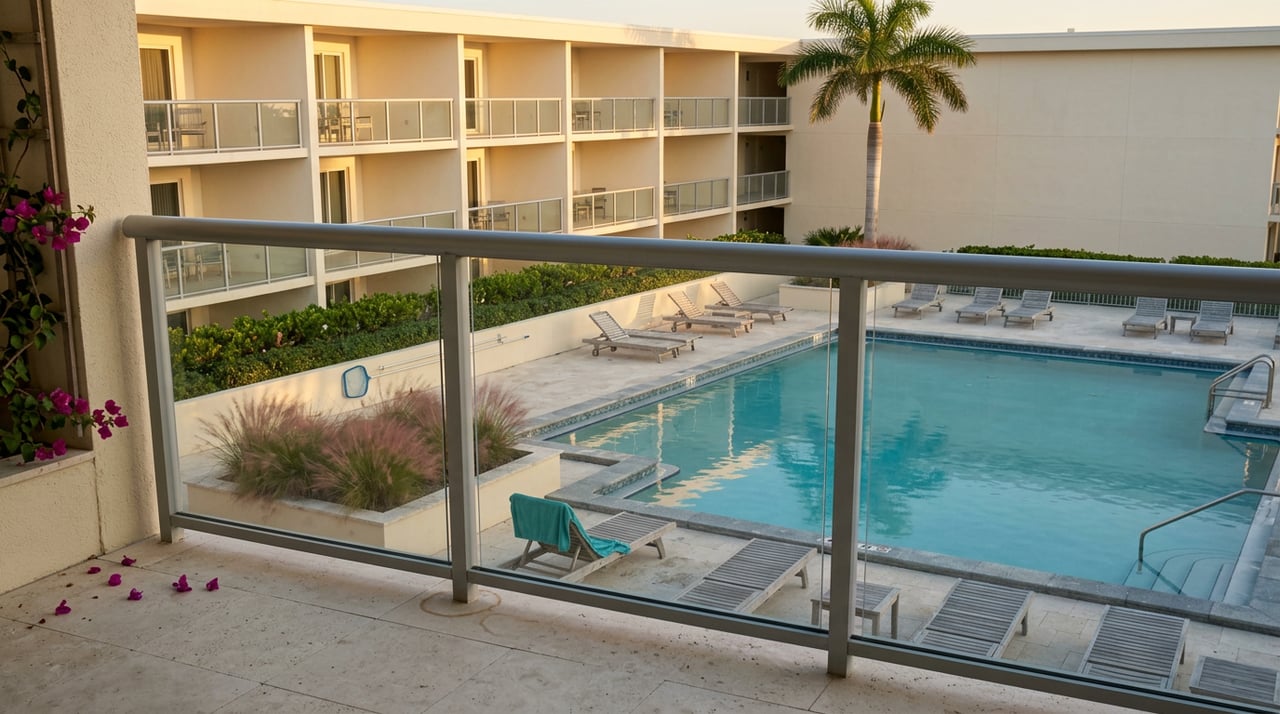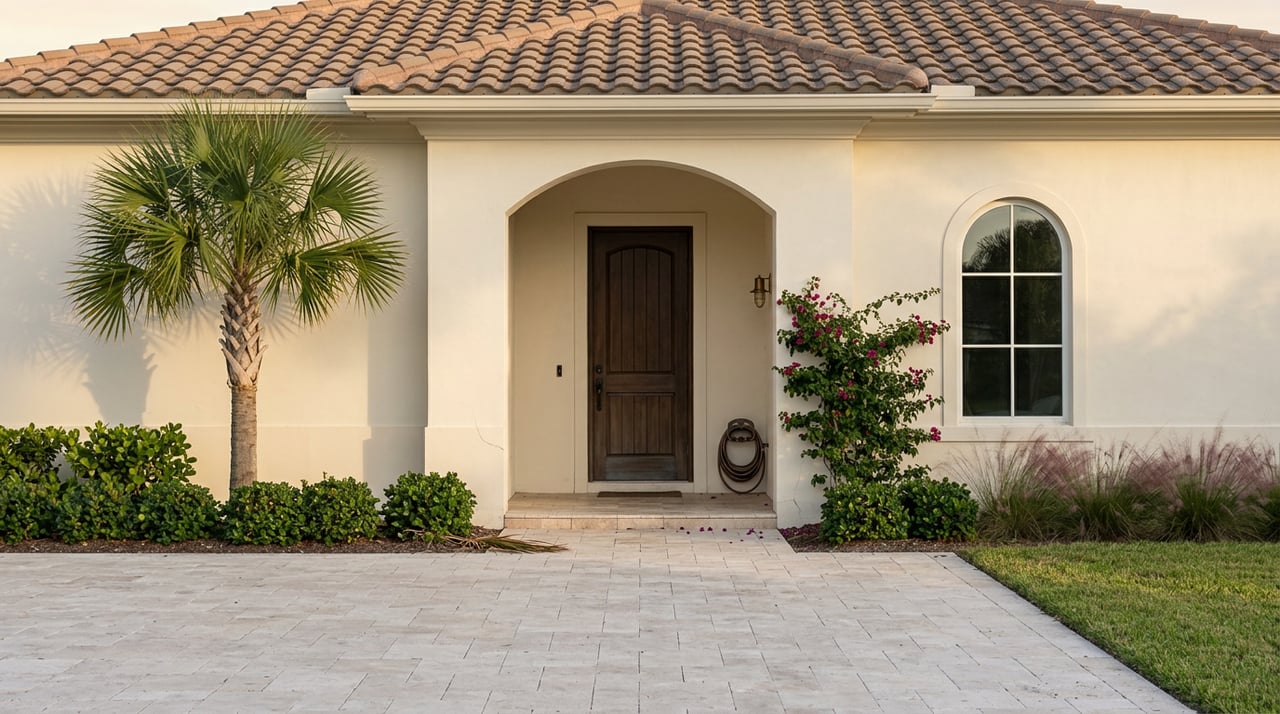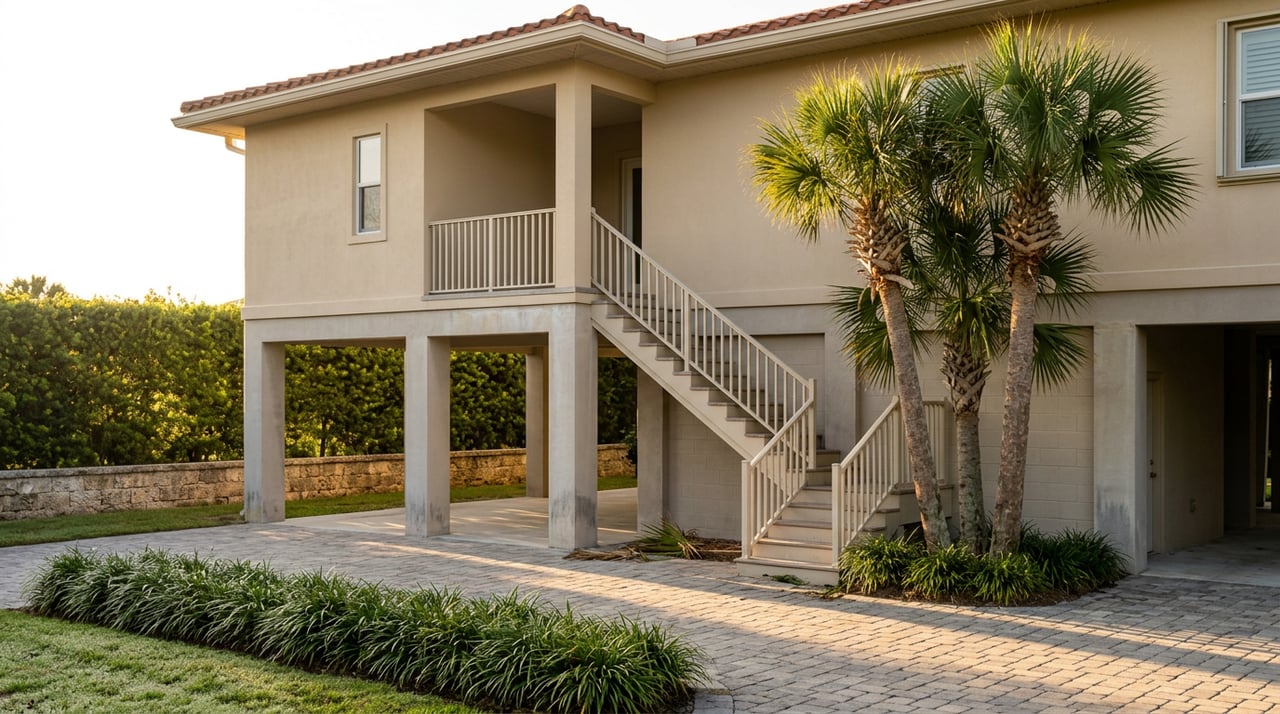
A buyer comparing two Anna Maria Island listings this summer found something that didn't add up. Both homes sat within a half mile of the Gulf. Both listed in the same price band. One carried an annual insurance quote a few thousand dollars higher than a typical policy on the mainland. The other carried a quote closer to five figures a month once storm coverage was added. Same island, same price range, wildly different cost of ownership. The gap wasn't about the view or the finishes. It was about which of the island's three towns the house sat in, and when it was built.
That's the piece the single median price you find on a portal search doesn't tell you. Anna Maria Island isn't one housing market wearing one number. It's three municipalities, each with its own construction era and its own relationship to the two storms that hit the Gulf Coast in the fall of 2024, and the island-wide median is an average of markets that no longer behave the same way.
One Island, Three Towns, Three Storm Stories
Anna Maria City sits at the island's north end, its inventory skewing toward older Florida cottages and a deliberate preservation of that quieter, historic character. Holmes Beach occupies the middle stretch and holds most of the newer construction built and renovated with vacation rentals in mind. Bradenton Beach, at the southern tip near the Cortez Bridge, is the liveliest of the three, walkable to the Bridge Street restaurant strip and closest to the mainland connection.
That geography mattered enormously in late 2024. Storm surge from Hurricane Helene pushed across much of Bradenton Beach at a scale the island hadn't experienced since 1921, leaving behind condemned structures and mold-damaged homes. Hurricane Milton followed two weeks later with Category 3 winds, compounding the damage. The recovery drew a clear line between properties across all three towns: elevated homes with hurricane-resistant features came back onto the market faster and sold at higher prices, while older ground-level construction, concentrated more heavily in some pockets than others, faced a longer and costlier road back.
The result, two years later, is that "Anna Maria Island" no longer describes one risk profile. It describes three, and the town you're looking at now says almost as much about your carrying costs as the price on the listing sheet.
Why the Median Keeps Moving
Here's where the confusion compounds. As of February 2026, Redfin's data for Anna Maria showed a median sale price of $1.6 million, down 7.1 percent from a year earlier, with homes taking an average of 174 days to sell compared to just 10 days the year before. That's a dramatic slowdown by any measure. But that median was built from five closed sales for the entire month. In a market that thin, one $900,000 cottage closing next to one $4 million gulf-front rebuild can swing the number by hundreds of thousands of dollars without any real shift in what buyers are willing to pay for comparable homes.
Other market reporting from earlier in the year put the island-wide single-family median closer to $2.1 million, down from a 2022 peak near $2.4 million but still well above pre-2020 levels of roughly $900,000 to $1.1 million. Both numbers can be true at once. They're measuring different windows, different sample sizes, and in some cases different geography entirely. Zillow's home value index for "Anna Maria, FL" specifically, which is the city at the island's north end and not the island as a whole, showed an average value of $1,895,816 as of June 2026, down 7.5 percent year over year. That's a measure of one town, presented in a way that reads to most searchers as a measure of the entire island.
None of this means the data is wrong. It means a single median price, pulled from a portal search box, tells you almost nothing about what a specific home in a specific town, built in a specific era, is actually going to cost you to own.
What the Storm Actually Divided
The practical version of this shows up in insurance quotes. Flood coverage under FEMA's Risk Rating 2.0 now runs meaningfully higher on most waterfront parcels than it did before the 2024 season, and rebuild premiums that followed Milton have pushed total annual carrying costs on a typical AMI home well past what buyers budgeted for even two years ago. Several private insurers tightened underwriting standards or pulled back from coastal Manatee County entirely after Milton, narrowing many buyers to Citizens Property Insurance or a thinner private market than existed before.
Elevation is the variable that decides which side of that line a given house falls on. A home with a current as-built elevation certificate showing it sits above base flood elevation can qualify for materially better terms than a comparable home a few blocks away that was built to an older standard. That's not a function of which town the house is in so much as when it was built and whether it's been elevated since, but the three towns aren't distributed evenly across that variable. Holmes Beach carries more of the newer, rental-optimized construction. Anna Maria City carries more of the older cottage stock the town has worked to preserve. Bradenton Beach, having taken the worst of the surge, now has the widest internal spread between rebuilt, elevated homes and properties still working through repair.
Florida law requires sellers to disclose known flood and storm damage history, and for any property that changed hands or was renovated since October 2024, pulling the permit record before writing an offer is worth the extra day it takes. It's the only way to know whether a listing's price already reflects its true elevation and construction status, or whether that adjustment is still coming.
The Number That Jumped in a Single Month
The clearest sign that this market is still finding its footing shows up in absorption rate, the measure of how many months it would take to sell through current inventory at the current sales pace. Inventory absorption on Anna Maria Island sat at 9.1 months in June 2026, already softer than the market's ten-year average of 8.1 months. By July, it had jumped to 14 months, a shift tied to roughly a 40 percent month-over-month drop in demand.
That's not a gradual cooling. It's a sudden pause, arriving right at the point in the calendar when insurance renewals for the coming hurricane season land in owners' mailboxes and when the two-year anniversary of Helene and Milton is fresh enough that buyers with a choice are inclined to wait and watch rather than commit. Whether that pause resolves into a longer buyer's market or snaps back once storm season passes without incident is the question worth watching over the next few months, town by town, rather than assuming the island-wide number tells the whole story.
What This Means If You're Comparing Two Listings
If you're weighing a home in Anna Maria City against one in Holmes Beach or Bradenton Beach, the list price is the least useful number on the page. Ask for the elevation certificate and confirm it reflects current as-built conditions rather than an older survey. Pull the permit history if the home changed hands or was renovated after October 2024. Get an insurance quote before you write an offer, not after, because that number will tell you more about the true cost of the house than the comparable sales the listing agent hands you.
Financing adds its own layer. Conforming loan limits for 2026 sit just above $800,000 in most Florida counties, which means nearly every Anna Maria Island purchase falls into jumbo territory, with lenders typically requiring 20 to 30 percent down and reserves covering 12 to 24 months of principal, interest, taxes and insurance. Buyers who arrive with a jumbo commitment letter already in hand can move within days when the right house appears in a thin market like this one. Those who start that process at the offer stage routinely lose to buyers who didn't.
Frequently Asked Questions
Is Anna Maria Island's median price still falling in 2026? It depends heavily on which month and which data source you're reading. February 2026 portal data showed a year-over-year decline, but that figure was built from only five closed sales, small enough that a single high-value transaction can move it substantially. A town-specific, construction-era-specific comparison tells you far more than the island-wide headline number.
Do all Anna Maria Island homes require flood insurance? Requirements vary by flood zone designation and financing, and elevation status plays a large role in what a policy actually costs. An elevation certificate reflecting current as-built conditions, not an older survey, is the document that determines where a specific property lands.
Why did buyer demand drop so sharply in July 2026? Inventory absorption jumped from 9.1 months in June to 14 months in July, alongside a roughly 40 percent month-over-month decline in demand. The timing lines up with insurance renewal season and the approach of peak hurricane months, both of which tend to make buyers pause even when inventory and pricing haven't fundamentally changed.
If you're trying to compare a specific home in Anna Maria City to one in Holmes Beach or Bradenton Beach and want a read on what the elevation certificate, insurance quote, and permit history actually mean for your offer, Julie Klick can walk through the specifics with you. Get My Valuation to start the conversation.