If you have spent any time this year reading about the Sarasota housing market, you have absorbed a specific story: prices came down, buyers gained leverage, sellers got realistic. That story is true almost everywhere in Sarasota County. It is not true west of the Tamiami Trail.
Countywide, 2025 closed with single-family median prices down about 6 percent and condo prices down closer to 15 percent year over year, with the steepest damage concentrated in properties above $1.5 million, which fell 12 to 15 percent from their 2022 peaks. That is a real correction, and it showed up in showings, price cuts, and longer negotiations across most of the metro. Yet in the same year, the corridor of neighborhoods between US-41 and Sarasota Bay, the area agents and buyers simply call West of Trail, posted price growth. Downtown Sarasota did too. Everyone else absorbed the hit. This stretch of bayfront addresses did not.
That is not a coincidence, and it is not a sign that West of Trail is somehow immune to market forces. It is a sign that West of Trail was never pricing the same thing everyone else was pricing.
The Correction That Skipped a Block
The county-level numbers are worth sitting with for a moment because they explain what buyers were reacting to elsewhere. Elevated mortgage rates in the 6 to 6.8 percent range cooled demand from relocators through late 2025 and into early 2026. Rising insurance and property tax costs made buyers more selective. By January 2026, citywide days on market averaged 84, and sellers were netting roughly 92 percent of original list price, a level of buyer leverage the broader market had not seen in years.
West of Trail buyers were shopping in that same rate environment and paying the same insurance premiums. What they were not doing was walking away. The neighborhoods that make up the corridor, among them Cherokee Park, Harbor Acres, Oyster Bay, McClellan Park, and Laurel Park, kept appreciating while comparable price tiers elsewhere in the county gave ground. If the correction were about affordability alone, West of Trail should have felt it first, since it sits at the top of the price ladder. Instead it sat mostly outside the story.
A Land Market Wearing a Housing Market's Price Tag
Here is the mechanism. Most West of Trail neighborhoods predate the HOA era entirely. There is no design review board, no rental restriction, no monthly assessment governing what an owner can do with a lot once they own it. That absence is not a minor footnote. It changes what a buyer is actually purchasing.
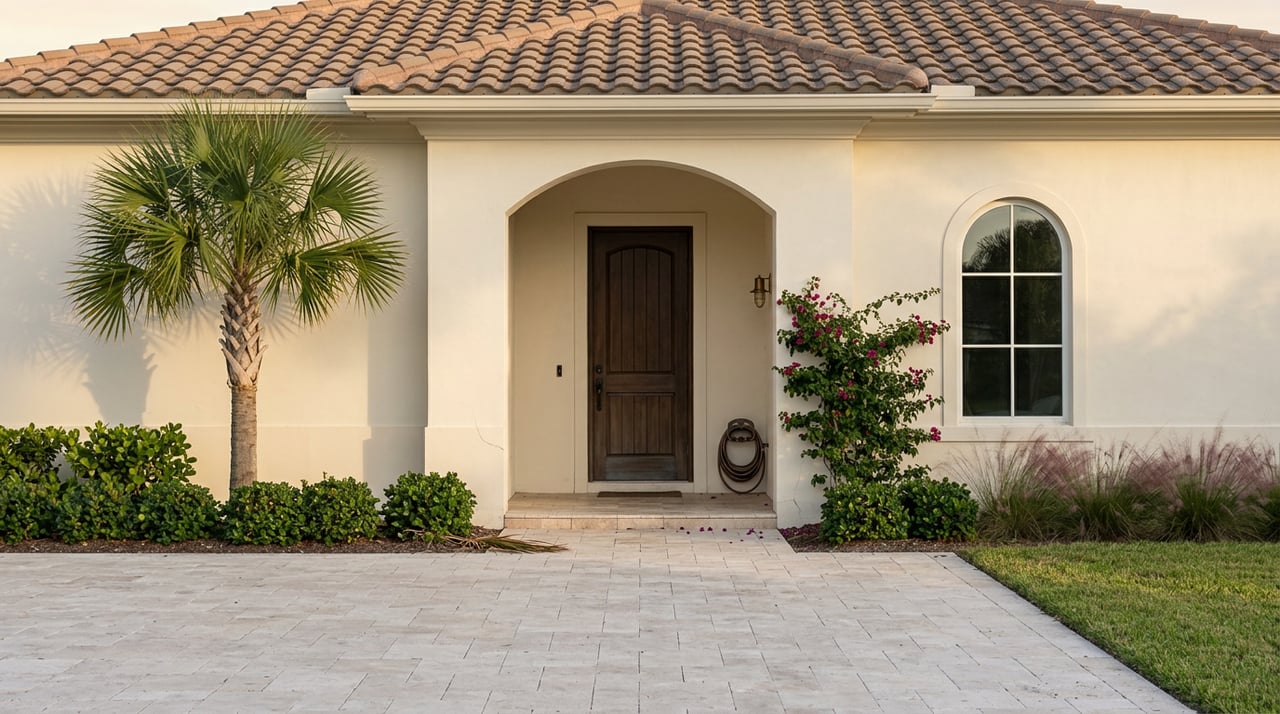
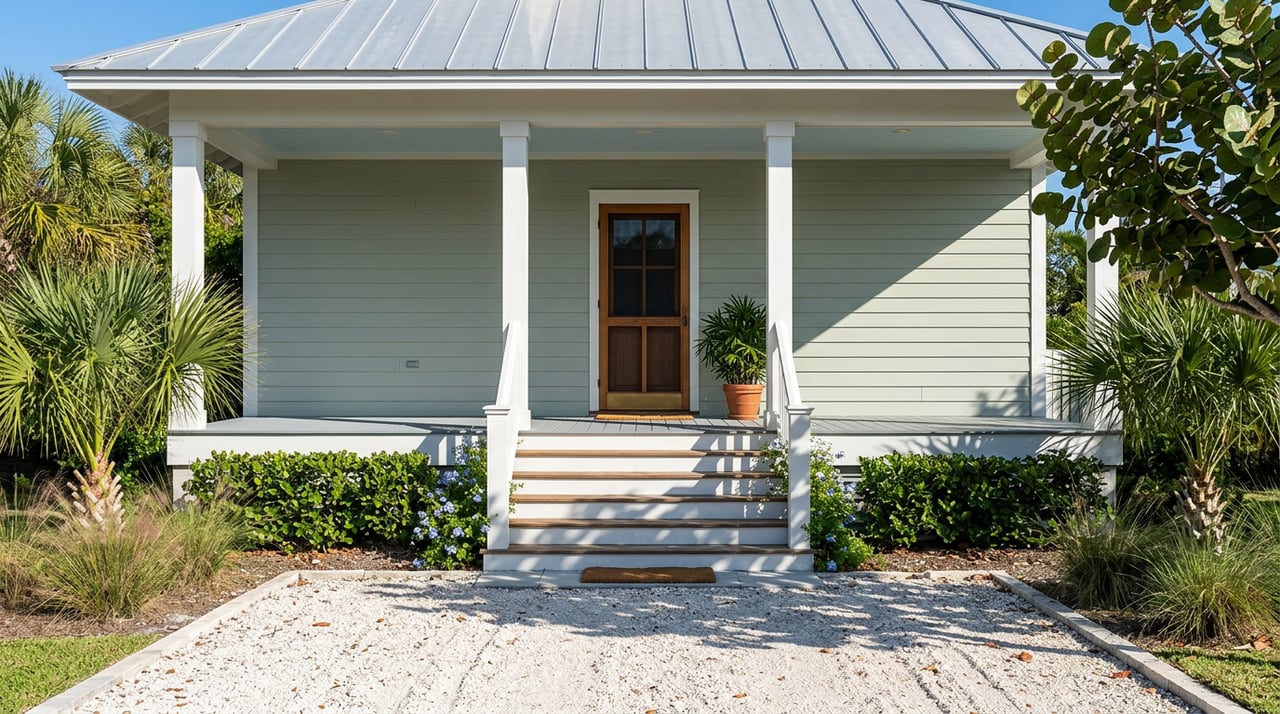
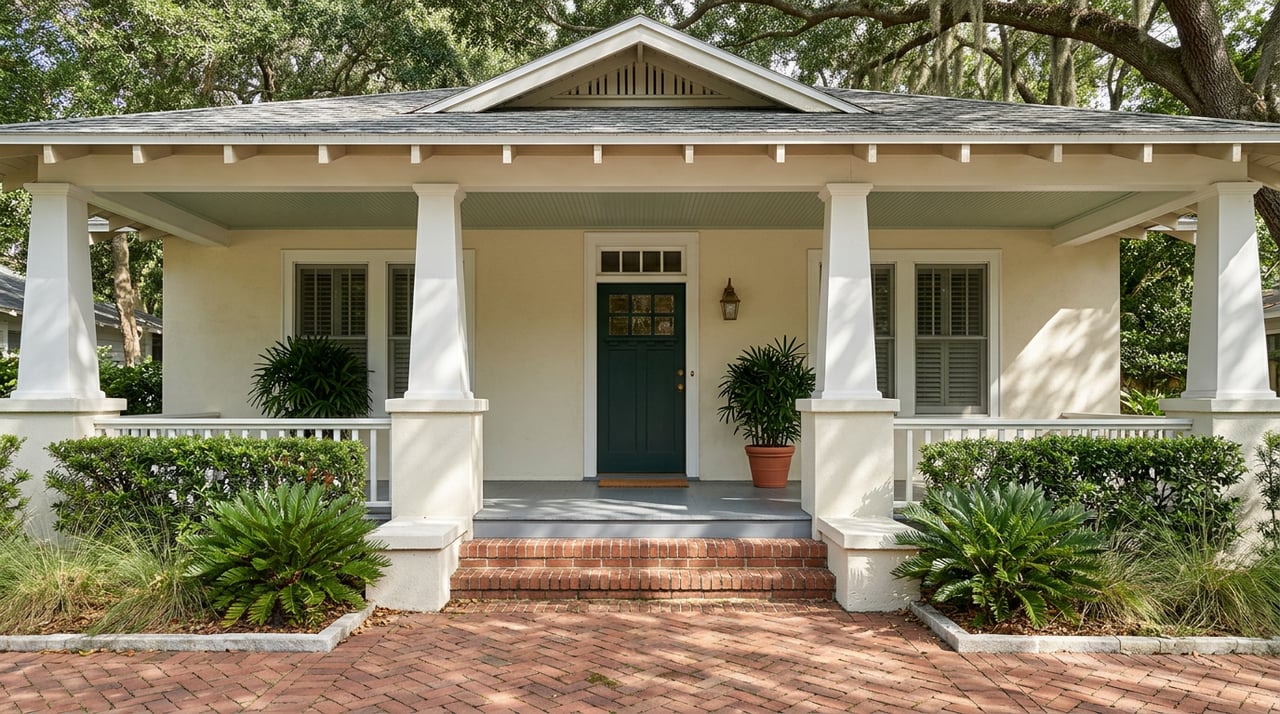
In a governed community, you are buying a house plus a set of rules that keep every other house on the block within some predictable range. In West of Trail, you are buying a lot, a location between Hudson Bayou and Phillippi Estate Park with Osprey Avenue running the length of it, and the unrestricted right to do whatever zoning and permitting allow with what sits on that lot. A 1950s bungalow next to a newly completed custom build is not an anomaly here. It is the normal texture of the corridor, because nothing stops an owner from tearing down and nothing requires them to match their neighbor's style.
That freedom is exactly why the corridor did not correct the way condo towers or planned communities did. Condo prices fall when a building's amenities age or reserves run short, because every unit is tied to the same shared structure. A West of Trail lot has no shared structure to depreciate. Scarcity, not architectural fashion, is what has held the price line here through multiple market cycles. There is a fixed, decades-old supply of land between the Trail and the bay, and nobody is making more of it.
A few practical things follow from that structure:
- Two homes on the same street can carry very different renovation histories and very different resale trajectories, so a comparable sale two doors down may not be a true comparable at all.
- Because there is no association to enforce upkeep, buyers should expect wider variation in exterior condition than in a governed community, even on desirable blocks.
- Permitting and zoning rules still apply and are worth confirming with the City of Sarasota before assuming a lot can be rebuilt exactly as imagined.
The Enclaves Behind the Number
"West of Trail" describes a corridor, not one neighborhood, and the differences between its named enclaves matter more than the umbrella term suggests.
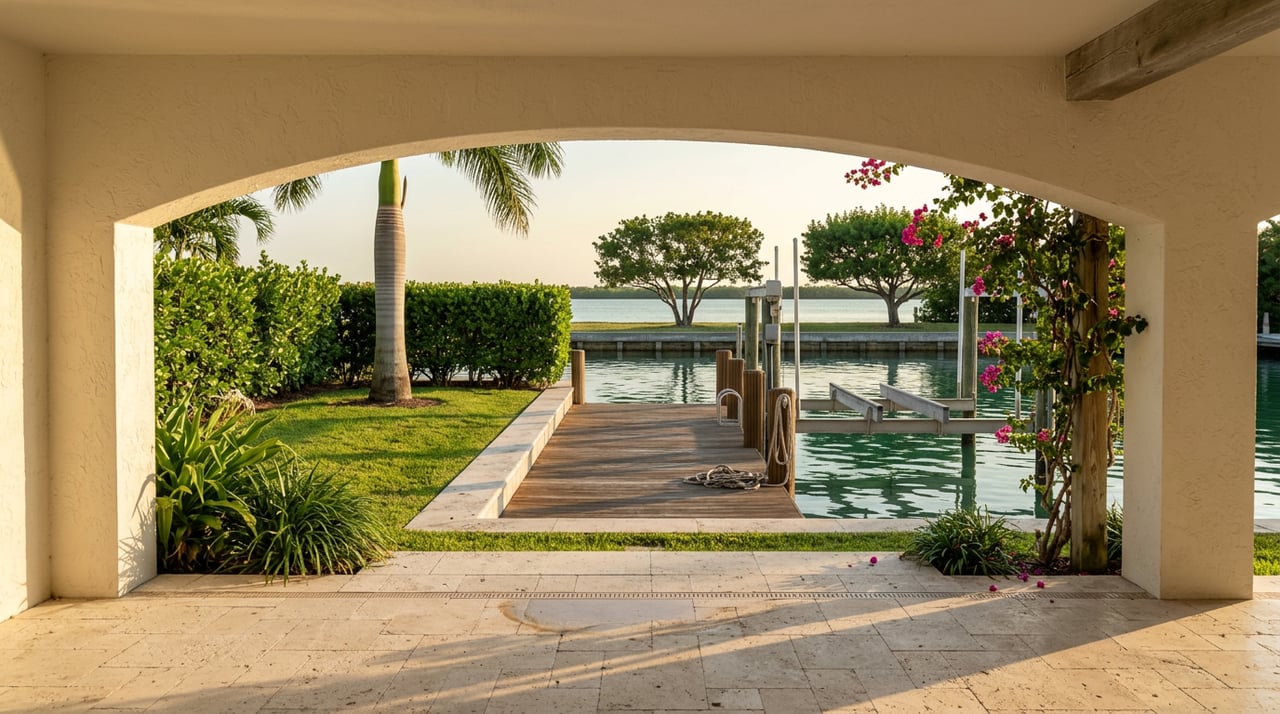
Harbor Acres sits at the top of the price ladder, with a median list price near $4.5 million as of January 2026, built around deep-water bayfront and canal lots wide enough for serious boats, offering bay access without crossing a bridge. Oyster Bay carries a similar canal-access profile but reads quieter and more residential in feel, a mix of historic homes and newer custom construction without Harbor Acres' concentration of trophy estates. The corridor's walkability advantage, easy reach of Southside Village's restaurants and a short drive to Sarasota Memorial Hospital, tends to matter most in blocks like Cherokee Park and McClellan Park that sit a little further from direct bay frontage, which has long made the corridor popular with medical professionals who want a short commute. Laurel Park rounds out the group as one of the more walkable, historic pockets closer to downtown proper.
The spread in what a dollar buys across these enclaves is wide even within West of Trail. Rough budget bands that hold up across the corridor: expect $400,000 to $800,000 for interior lots that need updating, $800,000 to $2 million for turnkey homes in the more established blocks, and $2 million and up for waterfront lots or new construction. As of mid-May 2026, the broader corridor showed a median list price of $729,777 across roughly 65 active listings, with a dozen new listings appearing in the prior 30 days and homes sitting a median of 75 days before going under contract.
Renovate or Rebuild: The Math Nobody Puts on the Listing Sheet
Because most of the corridor's housing stock dates from the 1920s through the 1970s, nearly every buyer here eventually faces the same decision: renovate what exists or clear the lot and start over. The unrestricted setting makes both paths legal, but they are not equally rewarded by the resale market.
Homes that hold value best tend to be the ones renovated to preserve original character rather than gutted to look new. A sympathetic renovation of an original Mediterranean Revival or a Sarasota School modernist home tends to command a premium that a generic gut renovation does not, because buyers here are paying in part for architectural authenticity that cannot be manufactured on a new lot elsewhere in the county. At the same time, the corridor is seeing real, ongoing teardown activity, particularly on interior lots without historic architectural interest, where the land value alone justifies clearing an aging structure.
The practical takeaway for a buyer comparing two similarly priced West of Trail homes: the one with thoughtful, character-preserving updates may be worth more over a five- or ten-year hold than the one with a full gut renovation, even if the finishes look identical on move-in day.
Why the Window Is Narrowing Now
The buyer leverage that defined early 2026, that 84-day average market time and 92 percent list-to-sale ratio, has not held through the year. Data covering June and the full second quarter of 2026 shows the luxury single-family segment across Longboat Key, Siesta Key, and West of Trail turning sharply toward sellers. Single-family homes over $1 million closed at 220 in June 2026 alone, up 38.4 percent year over year, and the $2 million to $3 million band nearly tripled, with 51 sales versus roughly a third of that a year earlier. For the full second quarter, single-family sales over $1 million totaled 658 transactions, up 25.8 percent year over year, with new pending sales, the leading indicator of what closes next, up 12.9 percent in June alone. New listings in this tier are roughly flat, which means demand is outrunning supply exactly in the price bands where West of Trail competes.
Put the two data points together and the picture sharpens. West of Trail avoided the 2025 correction because it was never pricing the same risk as the broader market. Now, as the luxury single-family segment it belongs to accelerates through the middle of 2026, the modest buyer leverage that existed in January is fading. A buyer who has been waiting for West of Trail to soften the way the rest of the county did in 2025 has been waiting for a correction that was never coming, and the data through June suggests the cost of waiting further is rising.
Two Questions We Get on Every First Call
Is West of Trail one neighborhood or several? Several. It is a corridor name covering roughly fifteen named neighborhoods between US-41 and Sarasota Bay, from Hudson Bayou south to Phillippi Estate Park, and pricing, character, and water access vary considerably from one to the next.
Are there HOA fees to budget for? In most cases, no. The majority of West of Trail neighborhoods predate the HOA era and have no governing association, though a handful carry voluntary associations or specific deed restrictions, so it is worth confirming on a property-by-property basis before assuming there is nothing to check.
If you are trying to make sense of what a West of Trail address actually costs, what it will let you build, and whether the current window still favors buyers, that is exactly the kind of question Julie Klick works through with clients before they ever write an offer. Reach out to Get My Valuation and start the conversation with the numbers that actually apply to your block, not the countywide headline.