If you own a serious boat, you already know this: not every waterfront address works the same way. On Bird Key, the difference between a great fit and a frustrating one often comes down to lot type, dock rules, flood details, and the exact route from your backyard to open water. If you are considering Bird Key for its boating lifestyle, this guide will help you focus on what matters most before you buy. Let’s dive in.
Why Bird Key Appeals to Boaters
Bird Key holds a distinctive spot in Sarasota Bay. It is one of Sarasota’s coastal islands, and the City of Sarasota describes it as an area developed primarily with single-family homes. That gives the neighborhood a private residential feel while keeping you close to downtown Sarasota and St. Armands Circle.
That combination is part of the appeal for boating buyers. The Bird Key Yacht Club sits on the island’s edge on Sarasota Bay, and the club describes itself as just a bridge from downtown and a short bridge from St. Armands Circle. For many buyers, Bird Key offers the balance of a residential waterfront setting with access to Sarasota’s larger boating network.
Bird Key Is a Residential Boating Neighborhood
Bird Key is best understood as a high-amenity residential island, not a stand-alone marina district. The boating lifestyle here is shaped by private homes, neighborhood dock conditions, and nearby club and public access options. In other words, the island is about how your specific property functions on the water, not just whether it has a waterfront label.
The City of Sarasota’s coastal-islands plan helps frame that context. Across the coastal islands, the city identifies water-dependent uses such as marinas, boat ramps, bay access sites, and fishing piers, along with multiple marina, yacht club, and public access facilities. That broader network supports Bird Key owners, even though the neighborhood itself remains primarily single-family residential.
Nearby Boating Access and Infrastructure
For private club access, Bird Key Yacht Club is the main boating anchor on the island. The club describes itself as a private waterfront club with boating, social, and recreational amenities. Its member reciprocity through the Yachting Club of America and the Florida Council of Yacht Clubs may also matter if you value regional cruising benefits and guest dockage options.
Just across the bay, Sarasota Yacht Club adds another layer of nearby boating infrastructure. It describes an expansive marina in sheltered waters between New Pass and Big Pass, along with a dockmaster and fuel dock. Its by-water guidance notes approximate depths of 16 feet in Lido Channel and about 10 feet at the fuel dock, which can be useful context for larger-vessel owners comparing nearby support options.
Public waterfront access nearby also adds everyday value. Bird Key Park at 200 John Ringling Causeway includes amenities such as fishing, kayaking, canoeing, walking paths, picnic tables, and sunset viewing, and the city describes it as a launch point for canoes and kayaks. Nearby public access also includes Bayfront Park and Marina, Island Park, and the Centennial Park Boat Ramp downtown.
Not All Bird Key Waterfront Is the Same
This is where serious boaters need to slow down and look closely. On Bird Key, “waterfront” is not one uniform condition. The Bird Key Homeowners Association handbook separates waterfront lots, canal lots, and bayside lots, and those distinctions can affect what you can do with your dock, lift, seawall, and water access.
That means two homes on the same island can offer very different boating functionality. Lot geometry, seawall placement, canal width, and the exact waterline can all shape whether a property works well for your vessel and your boating habits. For a buyer, the takeaway is simple: evaluate the site, not just the address.
Dock Rules Can Shape Your Options
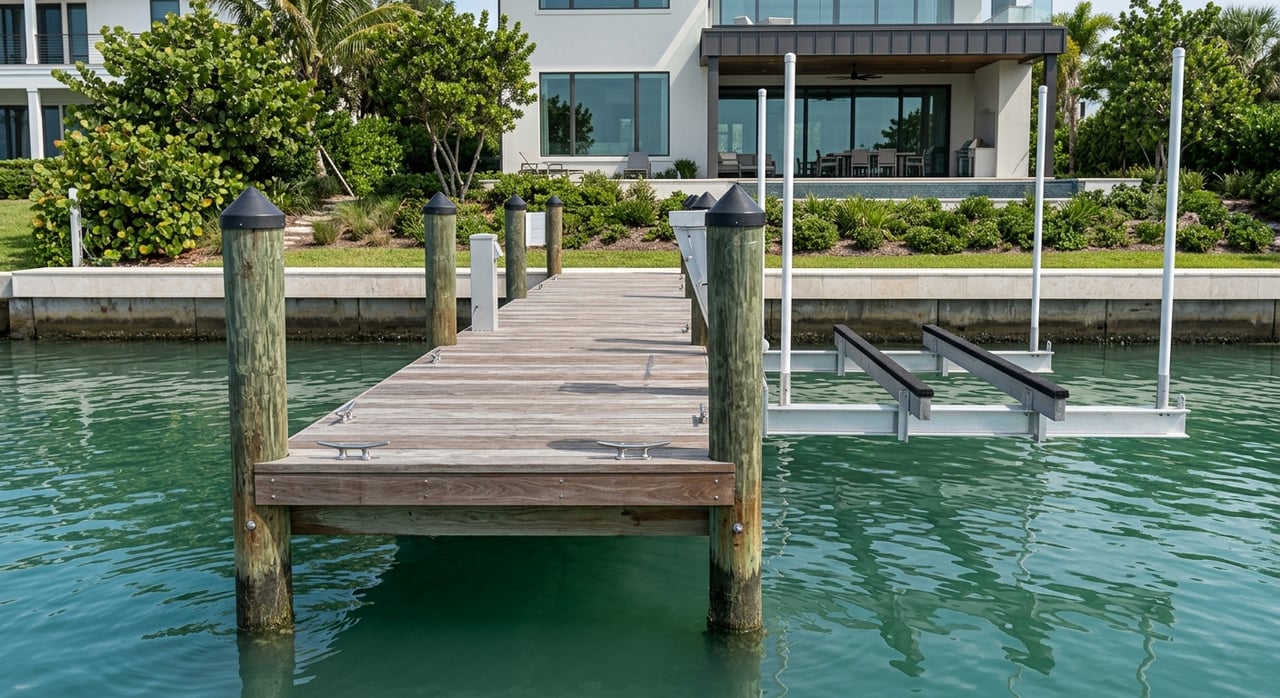
Bird Key’s HOA documents make clear that docks and related structures are tightly regulated. The handbook specifically addresses fixed and floating docks, boat lifts, mooring posts, davits, dredging, and canal incursions. It also states that no construction or material change to a dock, seawall, or other exterior element may begin without prior written Association permit approval.
For waterfront lots, the handbook includes specific limits. Docks and pilings may not extend within 15 feet of the extended side property boundary, and they may not extend more than 20% into the width of the owner’s canal. The handbook also states that waterfront pool cages may not extend into the 30-foot waterway setback.
If dredging is part of your future plan, that also requires caution. The HOA handbook says no dredging may begin without all applicable governmental permits. For buyers who expect to rework a dock or improve depth conditions later, permit history and feasibility should be part of your review before you close.
City Permitting Adds Another Layer
Beyond HOA approval, the City of Sarasota has its own dock construction requirements. For dock work, the city requires a site plan that shows lot lines extended into the water, dock length measured from mean high water, and the location of boat lifts and tie-off pilings. These details matter because the city is reviewing real, measurable conditions at your specific waterfront edge.
For new docks or dock extensions in open Sarasota Bay waters, the city also requires a signed and sealed bathymetric survey. The city’s minimum plan requirements also state that dock decking cannot exceed 5.0 feet above mean high water and railing height cannot exceed 42 inches. If you are buying with renovation plans in mind, this is one of the clearest reasons to treat the property as a permitting case, not just a lifestyle purchase.
Flood and Insurance Due Diligence Matter
For Bird Key buyers, flood and insurance questions belong at the front of the process. The City of Sarasota participates in the National Flood Insurance Program and has a Community Rating System Class 5 designation, which the city says can reduce flood insurance premiums by up to 25% before fees. The city also notes that the current Flood Insurance Rate Maps and Flood Insurance Study became effective on March 27, 2024.
That does not mean every property will look the same from an insurance standpoint. The city’s floodplain materials specifically reference waterfront areas such as Bird Key and note that the city offers flood-zone information, elevation guidance, and site visits for new and existing buildings. On a practical level, you should verify the current flood zone, elevation, seawall condition, and any prior substantial damage or repair history for the exact address you are considering.
The HOA side matters here too. The Bird Key handbook states that its requirements can differ from the city’s, applies to docks and seawalls as well as homes, and warns that non-compliance can lead to fines, liens, and legal action. The City of Sarasota also reminds Bird Key applicants to submit the HOA affidavit with permit applications.
Questions Serious Boaters Should Ask
If you are shopping Bird Key for boating, these are the questions that can save time and protect your investment:
- Can your boat reach open water on your preferred route without problematic bridge clearance, shoaling, or no-wake constraints?
- Is the lot bayfront, canal, or bayside, and what rules apply to that specific lot type?
- Is there a current survey, bathymetric survey, or permit history for the dock, seawall, lift, or dredging?
- What are the current flood zone, elevation, and insurance implications for this address?
- Which approvals would you need from the Bird Key HOA, the City of Sarasota, and any applicable state agencies before changing the dock or adding a lift?
These are not small technicalities. For many luxury buyers, they are the difference between a waterfront home that supports your boating lifestyle and one that creates delays, added cost, or design limits.
What Buyers Often Miss on Bird Key
One of the most common mistakes is assuming that all waterfront homes on Bird Key offer similar dock potential. In reality, the rules and physical conditions can vary significantly from lot to lot. A beautiful home may still require careful review if your plans include a larger vessel, a lift upgrade, seawall work, or any dock expansion.
Another common mistake is treating flood and insurance review as something to handle later. On a coastal property, those details can affect both ownership costs and future improvement plans. When you are buying at this level, it makes sense to evaluate the boating function, the permit path, and the carrying costs together.
Why Local Guidance Matters
Bird Key can be an exceptional fit for the right boating buyer, but it rewards precision. This is a neighborhood where the lifestyle is real, the location is strong, and the waterfront setting is highly appealing, yet the smartest decisions are made property by property. That is especially true if you want a home that supports a specific vessel, cruising routine, or future dock improvement.
Working with a local advisor who understands Sarasota’s barrier-island neighborhoods, waterfront logistics, and the review points that matter can help you move with more confidence. When you narrow your search through the lens of dock usability, permitting, seawalls, and flood exposure, you are far more likely to find a property that works as beautifully in practice as it does in photos.
If you are considering Bird Key or comparing it with nearby waterfront neighborhoods, Julie Klick offers high-touch guidance shaped by long-term local knowledge and real experience with coastal properties, docks, seawalls, and waterfront buying decisions.
FAQs
What makes Bird Key attractive for boating buyers in Sarasota?
- Bird Key combines a primarily single-family residential setting with waterfront access, the Bird Key Yacht Club on the island, proximity to Sarasota Yacht Club, and convenient access to downtown Sarasota and St. Armands Circle.
What should boating buyers verify before buying a Bird Key waterfront home?
- You should confirm the lot type, dock and seawall configuration, permit history, flood zone, elevation, insurance implications, and the approvals needed for any future dock or lift changes.
Do all Bird Key waterfront homes have the same dock potential?
- No. The Bird Key HOA distinguishes among waterfront, canal, and bayside lots, and each property’s geometry, waterline, seawall location, and applicable rules can affect dock design and boating use.
What approvals are needed for dock changes on Bird Key?
- Bird Key properties may require prior written HOA approval, City of Sarasota permitting, and in some cases additional governmental permits depending on the scope of dock, dredging, or seawall work.
Why do flood details matter when buying on Bird Key?
- Flood zone, elevation, seawall condition, and any prior substantial damage or repair history can affect insurance costs, ownership planning, and whether future waterfront improvements are practical for that property.