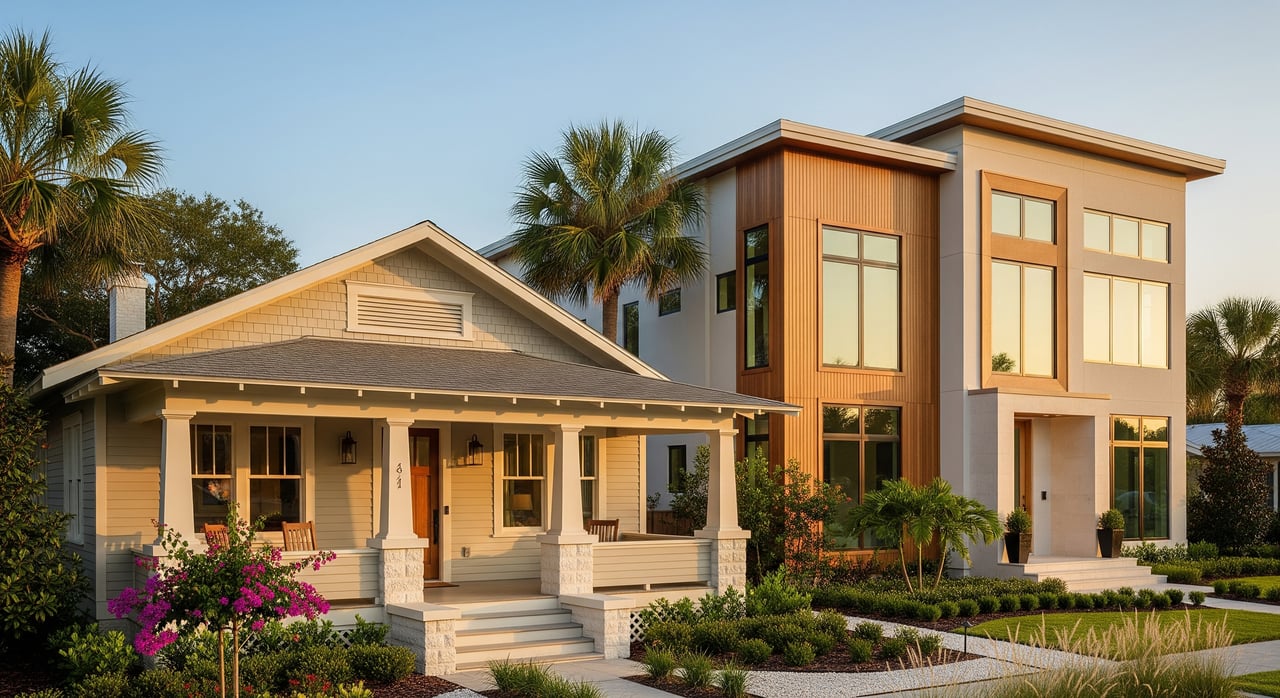
Torn between a sleek new infill home and a charming mid‑century bungalow in Arlington Park? You are not alone. The neighborhood’s central Sarasota location and mix of original bungalows and modern builds give you real choices, each with different costs, timelines, and risks. In this guide, you will learn how permitting, insurance, systems, maintenance, and resale play out differently so you can choose with confidence. Let’s dive in.
Arlington Park at a glance
Arlington Park sits near the heart of Sarasota with quick access to downtown, cultural venues, and beaches. The housing stock includes modest mid‑century bungalows alongside a growing number of two‑story infill homes. This mix influences lot coverage, tree canopy, and drainage patterns.
Before you compare properties, confirm whether the address is inside the City of Sarasota or in unincorporated Sarasota County. Rules, reviews, and timelines can differ. Start with the City of Sarasota Planning and Development Services or the Sarasota County Building Permits and Inspections portals to verify jurisdiction and property records.
Permitting basics: renovation vs new build
Check your jurisdiction
Both the city and county enforce the Florida Building Code. The code covers wind, structure, and energy requirements, with local amendments. You can review the current editions through the Florida Building Commission. If a property is in a mapped flood zone, local floodplain rules and FEMA standards apply. The FEMA Flood Map Service Center is the place to check flood status.
What needs a permit
- Renovation: Structural changes, roofing, electrical, plumbing, HVAC, and most window replacements typically require permits. Cosmetic work like paint usually does not. Larger remodels can trigger life‑safety upgrades and may require new‑construction‑level compliance for altered areas.
- New build: You will submit full plans for building, site drainage, utilities, and zoning compliance. New construction must meet current Florida Building Code and energy standards.
Ask for the seller’s permit history and copies of final inspections for any prior work. For a vacant lot, confirm development constraints and utility capacity before you buy.
Timelines and common hurdles
Cosmetic permits often issue in days or weeks. Substantial remodels and new builds typically need weeks to months for plan review. From start to finish, a new infill home often runs 9 to 18 months or more. Common hurdles include floodplain elevation, tree protections, site drainage, utility laterals, and any local design reviews.
Insurance and risk in Sarasota
Wind and hurricane realities
Florida’s insurance market can be volatile because of storm risk. Wind mitigation features such as impact‑rated windows, strong roof‑to‑wall connections, and secondary water barriers can reduce premiums. For market context and guidance, review the Florida Office of Insurance Regulation. If private coverage is limited, some owners use Citizens Property Insurance.
Flood risk and elevation
Flood insurance is tied to FEMA flood maps and the property’s elevation. Lenders require flood policies in Special Flood Hazard Areas. New construction elevated above base flood elevation can cut premiums and reduce risk, although elevation adds cost. Large renovations may trigger “substantial improvement” rules in flood zones, which can bring elevation or flood‑hardening requirements.
Practical tradeoffs
- Renovated bungalow: Older roofs, non‑impact windows, or dated systems can raise premiums or complicate underwriting. Retrofitting windows and improving roof attachment can help, but you will pay upfront.
- New build: Built to current codes, often easier to insure, and typically qualifies for mitigation credits that lower premiums. Expect a hurricane deductible as part of any Florida policy.
Systems and maintenance reality
Typical lifespans in Florida
- Roof: 15 to 25 years for asphalt shingle; 30+ years for tile or metal.
- HVAC: 10 to 15 years, with heavy use in our climate.
- Water heater: About 8 to 12 years for tank units.
- Electrical panel: Often 30+ years but may need capacity upgrades.
- Plumbing: Copper and PEX last longer; older galvanized lines and polybutylene can be problematic.
Termites, humidity, and heavy rain make moisture control vital. Look for proper grading, gutters, downspouts, and drainage.
Maintenance budgeting
A common rule of thumb is at least 1% of home value per year for newer homes. Older homes often need 2 to 3% or more, unless the renovation replaced major systems. A comprehensively renovated bungalow can run similar to a new build for several years if the work covered roof, HVAC, electrical, plumbing, and windows.
Energy and comfort
New homes must meet the current Florida Energy Code, which means better insulation, tighter ductwork, and efficient HVAC. A renovated bungalow can reach similar performance with targeted upgrades like impact windows, attic insulation, duct sealing, and a high‑efficiency system.
Costs, timelines, and resale
Upfront vs total cost
- New build: Higher cost per square foot, lower immediate maintenance, modern systems, and warranties. Insurance and utilities may be lower initially. Remember that assessed value and property taxes can be higher.
- Renovated bungalow: Often a lower entry price than new construction on the same lot. True value depends on the quality and scope of renovations. Verify permits and final inspections to avoid inheriting unpermitted work.
Regional cost snapshots as of 2023 to 2024 vary by scope and finish level. New infill homes often run roughly 200 to 450+ dollars per square foot. Major gut renovations with systems replacement can run roughly 150 to 350+ dollars per square foot. For a reality check on remodeling trends, see the industry’s Cost vs. Value reports.
Project timelines
- Renovation: Cosmetic refreshes can take weeks. Interior remodels often run 2 to 6 months. Full systems replacements and structural changes can take 3 to 9+ months.
- New build: Site prep, permitting, and construction typically range from 9 to 18 months, sometimes longer with site or permit constraints.
Resale drivers in Arlington Park
Buyers value location and well‑executed design. Updated mid‑century homes that keep character can sell well. So can new builds with modern layouts and indoor‑outdoor flow. Execution quality and site position matter more than age alone.
Decision framework: which path fits you
Quick takeaways
- If you want fewer surprises and easier insurance, a new build or a fully documented renovation is a safer bet.
- If you love original character and a single‑story footprint, a renovated bungalow with recent systems can be a great fit.
- If time is tight, look for move‑in ready homes. If you can wait and want a custom plan, consider building.
- If flood risk is a concern, building to current elevation standards may pay off long term.
Due diligence checklist
- Permits and inspections: Get all permit numbers and final approvals. Confirm no open permits.
- Systems inventory: Roof, HVAC, water heater, electrical service, and plumbing type with install dates.
- Structural and moisture: Drainage, settlement signs, prior water intrusion, and termite history.
- Flood status: FEMA zone, elevation certificate, prior flood claims, and current premiums.
- Insurance: Ask carriers for estimates based on roof age, window type, and mitigation features.
- Zoning and site: Setbacks, tree protections, any design reviews, and utility capacities.
- Contractors: If renovating, obtain multiple bids from licensed, insured pros.
- Warranties: Review builder and product warranties, and whether contractor warranties transfer.
Questions to ask
- What permits and final inspections document past work, and can I review them?
- How old are the roof, HVAC, water heater, and electrical panel, and when were they last serviced?
- Has the property had any flood or storm claims?
- Are there any outstanding code violations or open permits?
- For a buildable lot, what is the status of utilities, tree protections, and nearby development plans?
Ready to compare homes?
If Arlington Park is on your shortlist, you deserve a clear, data‑driven plan. Whether you are leaning toward a modern new build or a thoughtfully renovated bungalow, an experienced local advisor can help you weigh permits, insurance, and long‑term ownership costs before you commit. For private guidance and a curated search that fits your timeline and budget, connect with Julie Klick.
FAQs
How do I verify if past renovations were permitted in Arlington Park?
- Ask for permit numbers and final inspection documents, then confirm records with the City of Sarasota or Sarasota County building departments.
What affects homeowners insurance most on older bungalows?
- Roof age and type, window and door impact ratings, and roof‑to‑wall connections drive premiums. Upgrading mitigation features can help reduce costs.
Do large renovations trigger flood elevation rules in Sarasota?
- If work meets local “substantial improvement” thresholds in a regulated flood zone, elevation or flood‑hardening requirements can apply under local floodplain ordinances.
Are new builds always cheaper to insure than renovated homes?
- Often yes, because new builds meet current codes and include mitigation features. A renovated home with impact upgrades and a newer roof can also insure well.
How much should I budget for annual maintenance?
- Plan for at least 1% of home value per year for newer homes. Older properties often warrant 2 to 3% or more unless major systems were recently replaced.