You moved to Lakewood Ranch for the lifestyle, so your lanai should feel like an effortless extension of your home. Maybe you’re dreaming of quiet mornings by the pool or a dinner party under the lights. You want it beautiful, functional, and compliant with local rules so it helps your resale. This guide walks you through styles, layouts, sightlines, and must‑know approvals for Manatee County and Lakewood Ranch communities. Let’s dive in.
Start with the view and flow
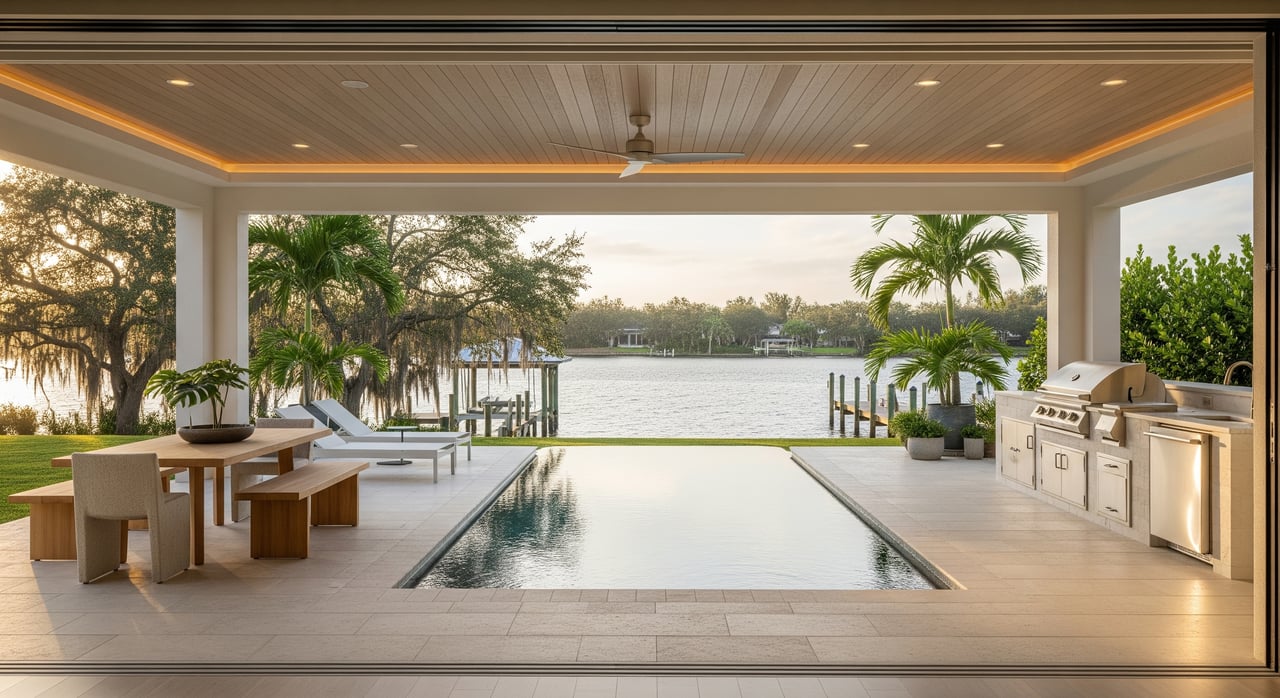
Your lanai should frame the best view from your main living areas. Arrange doors, seating, and dining so you see the pool and yard the moment you enter the room. Keep the floor plane as continuous as possible to blur the line between inside and out.
Stage primary seating where you can look past minimal vertical lines. If a railing is required, low or glass options can help, where permitted. Use neutral, durable finishes so buyers see a turnkey, resort‑style space.
Choose the right cage style
Selecting a screen‑enclosure profile that matches your home’s architecture gives a polished look buyers expect in Lakewood Ranch.
Gable or peaked cages
A gable adds height and a defined silhouette. It suits homes where you want a vaulted feel over the main seating or dining area. Hybrid layouts can place a gable above the core space with lower flat sections around it.
Hip roof profiles
Hip designs offer clean lines that pair well with Mediterranean or mission‑influenced homes common across the area. They read refined and can integrate smoothly with complex rooflines.
Flat or eave‑style profiles
Flat profiles keep the look simple and often cost less. They are easy to attach to many house types and work well where height is limited. They also reduce visual bulk near upper windows.
Frame colors and finish
Standard frame colors include white, bronze, and clay or bronze‑brown. Coordinate with your trim and window frames for a cohesive look. Choose powder‑coat finishes rated for coastal humidity for long‑term durability.
Pick smart screens and surfaces
Mesh options
- Standard insect screen for airflow and visibility.
- Solar or sun‑control screens to reduce heat and UV on afternoon exposures.
- Pet or tear‑resistant mesh for active households.
- Impact‑rated or laminated panel systems when you need engineered components. These are heavier and may be treated as structural elements under code.
Flooring and thresholds
Porcelain pavers, slip‑resistant tile, or sealed concrete hold up well outdoors. Keep threshold transitions smooth. If accessibility is a priority, plan for wheelchair‑friendly entries.
Water management and the house envelope
Integrate flashing where the lanai meets the house to avoid leaks. Route gutters and downspouts so runoff does not interfere with columns, walkways, or pool equipment. Thoughtful details reduce condensation and maintenance.
Plan a functional outdoor kitchen
Buyers here expect a refined outdoor kitchen that works as well as it looks.
Functional zones to include
- Cooking zone: grill or heat element placed to push smoke away from doors and main seating.
- Prep and cleanup: counter space, sink, and storage for trash or dish items.
- Refrigeration: under‑counter drawers or a weather‑rated upright unit.
- Dining and service: bar seating or a dedicated table area, plus a pass‑through to the interior kitchen when possible.
- Storage and utility: weatherproof cabinets and accessible shutoffs for gas or power.
Appliances, power, and venting
Confirm venting clearances if you add a hood or powerful grill. Use weather‑rated outlets with GFCI protection. Keep utility lines accessible for service but visually concealed.
Fuel choices
Gas is common for grills. Check for natural‑gas availability on your lot or plan for propane with proper screening. Electric or induction options work well if you prefer lower maintenance, but ensure adequate circuits.
Comfort, privacy, and shade
Layer shade solutions to manage midday heat. Retractable awnings, pergola shades, or oversized umbrellas can improve comfort without closing in the space. Use planting and fencing to create privacy while preserving long sightlines from interior rooms.
Lighting adds evening usability and showability. Combine task lighting at the kitchen, soft ambient lighting for conversation, and pathway lighting for safety.
Permits, setbacks, and approvals
Before you design too far, confirm what your property allows. Expect a two‑step review path in Lakewood Ranch.
Who to contact first
- Your neighborhood HOA or Architectural Review Board for design standards, colors, screen types, and rules on outdoor kitchens. Many communities require ARB approval before county permits.
- Manatee County Building and Development Services for building permits, plan review, and trade permits such as electrical, plumbing, gas, or mechanical.
- Utility providers if you are adding or moving services.
- Flood maps to confirm any elevation or flood‑zone requirements on your lot.
What to prepare for permitting
- Permit application for a screen enclosure or accessory structure.
- Site plan showing the house, pool, proposed lanai footprint, distances to property lines, and locations of equipment and utility connections.
- Construction drawings or engineered plans for the enclosure, especially for larger spans and wind loads.
- Contractor license information for Florida and Manatee County registration where applicable.
- Product information for screens, framing, and outdoor kitchen appliances if needed for clarity on venting or gas lines.
- HOA or ARB approval letter or stamped plans if required.
Setbacks and easements
Screen enclosures are usually treated as accessory structures, but setbacks vary by zoning district, recorded plat, and any community standards. Many lots near conservation areas include extra restrictions or drainage easements. Do not assume a single number applies. Verify your specific lot’s zoning and recorded plat, then confirm with your ARB.
Wind, code, and hurricane notes
Florida Building Code wind provisions and Manatee County enforcement determine structural design and attachment requirements. Standard screen mesh is not considered opening protection for wind‑borne debris. If your home must have protected openings, a typical cage will not meet that requirement unless engineered impact‑resistant components are used.
Inspections and timing
Expect footing or anchor inspections if foundations are required, then frame and attachment inspections, plus electrical, plumbing, or mechanical finals as needed. Plan for several weeks for ARB review plus county plan review before construction. If work is in progress during a sale, disclose permit status and coordinate final inspections.
Maintenance, budgets, and value
Ongoing care
Aluminum frames with quality powder coats handle humidity well, but screens will need replacement over time. Outdoor appliances may require more frequent service than indoor versions. Reseal grout or stone periodically and keep gutters and flashing clean.
Cost planning
Budgets vary with size, roof profile, mesh type, and how the cage ties into the house. Outdoor kitchens scale in cost with appliances, surfaces, and utility runs. Get two or three local bids and confirm whether engineered drawings and permit fees are included. Plan for an electrical panel upgrade if you are adding high‑draw appliances.
Resale strategy
A well‑designed, permitted lanai with strong sightlines and a practical outdoor kitchen shows beautifully in Lakewood Ranch. Keep finishes neutral and durable to appeal to more buyers. Save all permits, approvals, and inspection records so your future buyer can close with confidence.
Your step‑by‑step checklist
- Review your lot’s plat and zoning to identify setbacks and easements.
- Contact your HOA or ARB for design standards and application steps.
- Choose cage style, mesh, and outdoor kitchen scope. Request 2 to 3 contractor estimates that include permits and engineered plans if required.
- Secure written ARB approval before filing county permits.
- Submit the county permit package with site plan, drawings, and contractor licensing.
- Schedule inspections and keep copies of all final approvals for your records and future disclosure.
Ready to create your Lakewood Ranch lanai?
If you want a space that looks great today and sells well tomorrow, align materials, sightlines, and approvals from the start. When you are weighing options or preparing to list, a quick conversation can save time and protect value. Reach out to Unknown Company to discuss your goals and get a clear plan.
FAQs
Do I need a permit for a Lakewood Ranch screen enclosure?
- Most screen enclosures require a Manatee County building permit and plan review, and many neighborhoods require ARB approval first.
Will a screen enclosure protect my pool during a hurricane?
- Standard screens reduce insects and sun but are not rated to stop wind‑borne debris or replace required opening protection.
What setbacks apply to a lanai or cage in Lakewood Ranch?
- Setbacks vary by zoning, recorded plat, and any HOA rules, and conservation or drainage easements may add limits, so confirm specifics for your lot.
Can I add an outdoor kitchen under the lanai cage?
- Yes, but plan for trade permits for plumbing, electrical, or gas, verify venting clearances, and obtain ARB approval where required.
How do I make my lanai more appealing to buyers?
- Prioritize clear sightlines from living and kitchen areas, choose durable neutral finishes, add shade and layered lighting, and document permits and approvals.